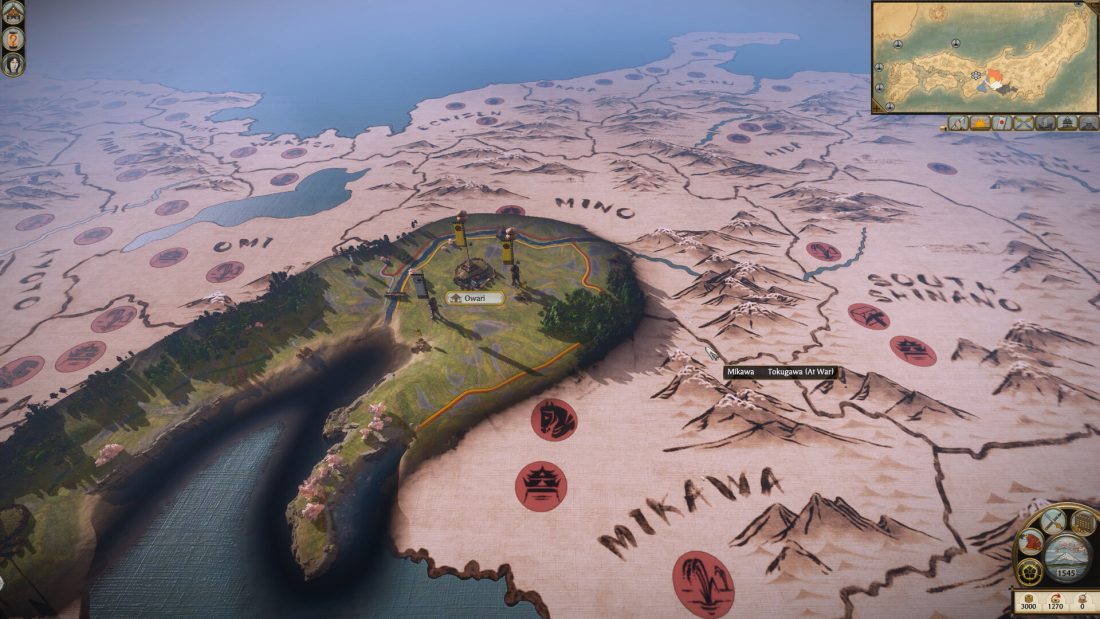
To win the main campaign in Total War: SHOGUN 2 – Complete Edition, build an economy that can feed and pay your armies, expand toward your clan’s required provinces, and take Kyoto with enough troops left to defend it. Becoming Shogun requires holding Kyoto for four seasons. You must also finish the territorial objectives and meet the deadline for your chosen campaign.
This guide follows the Sengoku-era Shogun 2 campaign from the first turn through campaign victory. Its Realm Divide preparation assumes you keep the mechanic enabled at its original strength. Rise of the Samurai and Fall of the Samurai have different political objectives and army development.
Choose a clan and a campaign you can finish
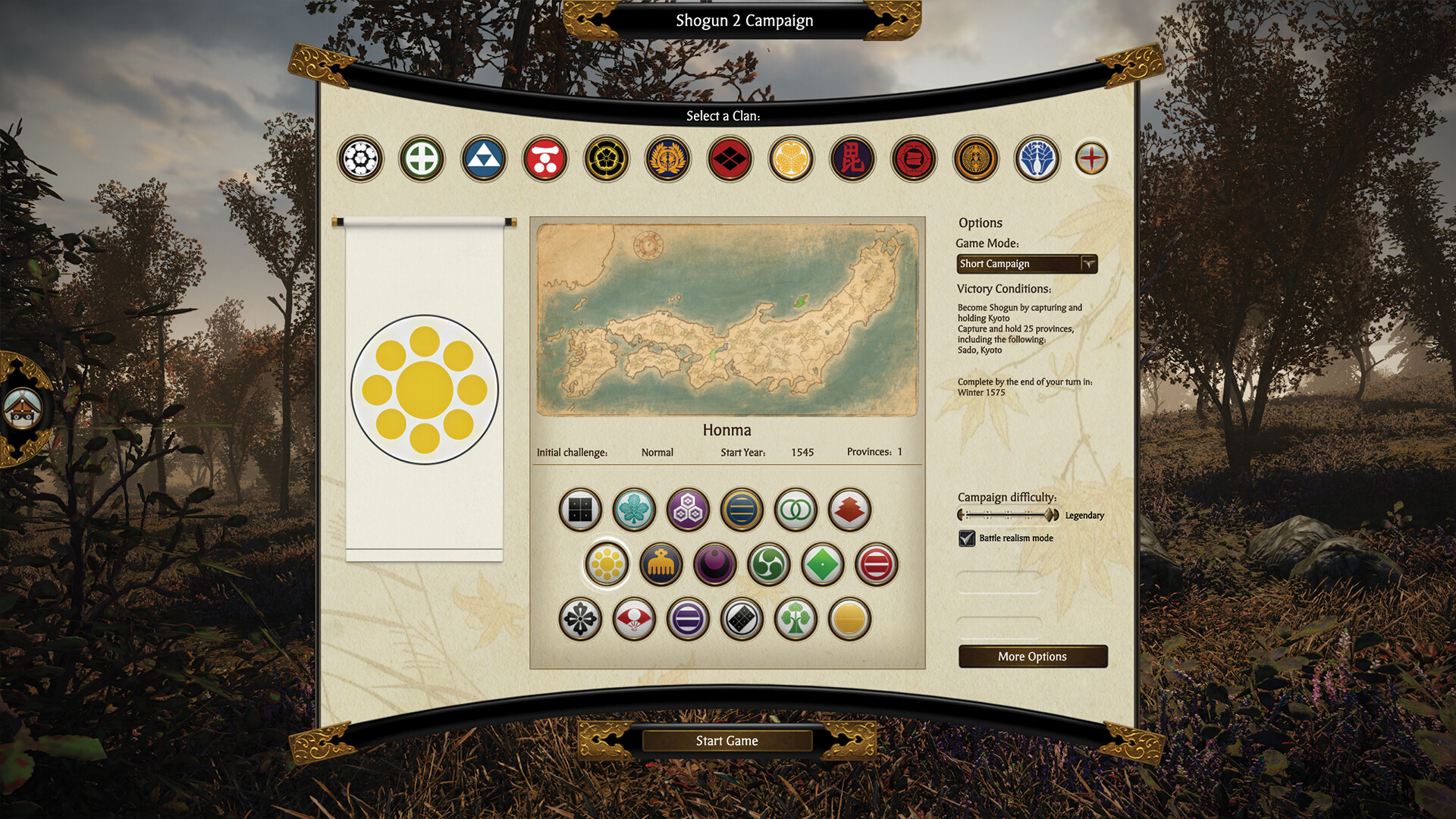
Select the Shogun 2 campaign before choosing your clan. For a first victory, a position near the edge of Japan gives you fewer nearby enemies than a central starting province. The selection map matters as much as the clan’s military bonuses: an island start also means planning how to reach the mainland.
Read the campaign’s Victory Conditions before pressing Start Game. Write down the province total, the named provinces you must hold, and the final date. These determine your route. The official Honma Short Campaign example requires 25 provinces including Sado and Kyoto by the end of your turn in Winter 1575. Its Sado requirement makes keeping the island part of the victory plan, even while your armies advance on the mainland.
Complete Edition lets you adjust Realm Divide, including turning it off. Keep the original strength if you want the traditional late campaign confrontation described below. Disabling it removes that mechanic, so the fame-triggered diplomatic collapse is no longer something you need to prepare for; the Kyoto and territorial objectives still deserve a plan.
Make the first province pay for the army
Open your starting province and compare its farms, castle and available construction slots. Farms produce food and income. Higher castle levels add building slots but consume more food, and advanced market buildings also consume food. A farm upgrade in one province can support consumption elsewhere because food is shared across your territory.
Keep a positive food surplus before adding another hungry castle or market upgrade. A surplus contributes to growth; zero balances production and consumption. A negative total creates public order penalties that worsen over subsequent turns. If food falls below zero, postpone more consumption and increase farm output. Reducing taxes can ease unrest while you fix the shortage, but it does not produce food.
In the province details, compare wealth with the town growth breakdown. Wealth gives an immediate contribution to income; growth improves the return over later turns. Give growth buildings time to pay for themselves early in the campaign. When the deadline is close and you still lack an objective province, reserve the money for the army that can take it.
In Complete Edition, hold Space on the campaign map to view the province overlays, including Food and Public Order. Use Public Order to locate troubled provinces, then open their details to identify the cause. The finance panel shows projected income and the public order effect of your tax rate. Use the panel’s lowest-public-order button to visit the province most at risk before ending the turn. Lower the overall tax rate when unrest is widespread, or exempt a troublesome province when the rest of your territory can support it.
Recruit a line that can survive its first battle
Open a castle’s recruitment tab to see the units available in that province. Each unit has an initial cost and recurring upkeep. Leave enough income to pay those wages after construction spending. Recruiting through a general in the field uses the troops available in his current province; it cannot summon units from a distant military centre, and those recruits cannot cross the sea to join him.
Yari Ashigaru give an early army a defensive spear line. Place them where enemy cavalry would otherwise reach your archers. With Complete Edition’s default controls, select your troops and use Alt + left-click drag to move them, or Ctrl + Alt + left-click drag to rotate them. Face the yari toward the approaching cavalry, then activate Yari Wall for a tight spear formation. Use stronger melee troops against a defended sword line; Yari Ashigaru remain vulnerable to samurai infantry and missiles.
Bow Ashigaru can shoot while the enemy approaches, but move them behind your melee troops before contact. They have poor melee ability and little protection against cavalry. Keep a spear unit near an exposed flank instead of sending every melee unit forward and leaving the bows alone.
When your recruitment buildings and finances allow it, Katana Samurai give you a stronger melee unit with higher morale. Use them against infantry that your ashigaru struggle to hold. They remain vulnerable to cavalry and missile fire, so replacing every spear and bow unit with swords creates new problems. Recruit the swords when enemy infantry is breaking your spear line, while keeping troops that can protect them from horses and arrows.
The general, morale and the army between battles
Bring a general with your main army. A force without one loses access to rallying and inspiration, even though a command unit provides a small morale bonus. Watch the morale colour above unit banners: green is healthy, yellow shows a penalty, and red means the unit is wavering.
If troops begin routing, select the general and use Rally while they are inside his influence radius. Shattered units will not respond. Keep him near the part of the line under pressure instead of spending his time chasing a fleeing enemy at the edge of the map.
Before the next campaign battle, replenish the survivors. In Complete Edition, clicking an army’s banner at a settlement selects the army directly, so you can inspect the troops before moving them out. An army with a general replenishes automatically on friendly territory; without a general, it needs one of your castle towns. Winter in enemy territory causes attrition. A flashing skull on the army banner means losses are continuing outside combat, so bring the force back to friendly ground when you cannot finish the advance.
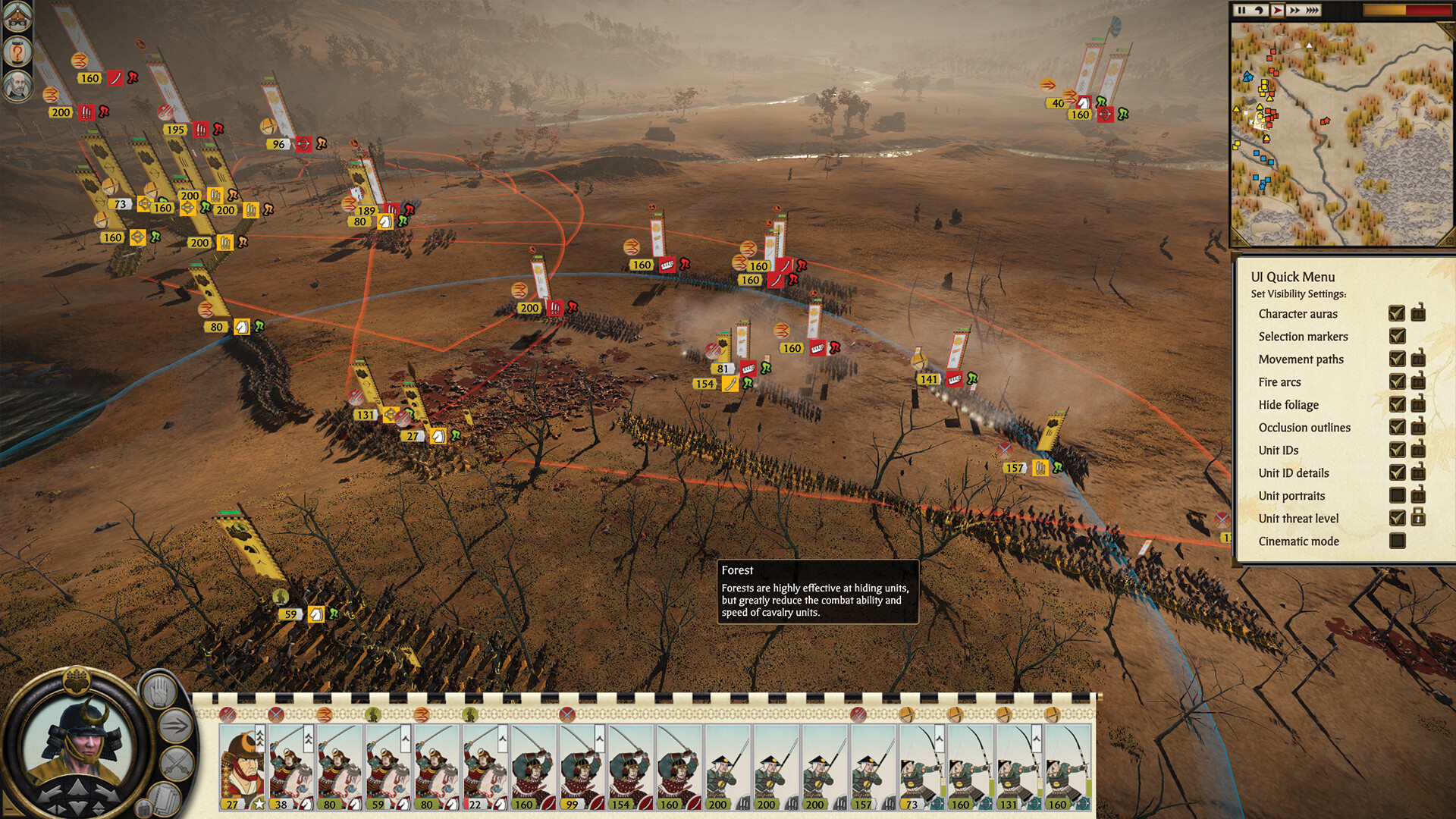
Complete Edition’s infantry fatigue fix makes exhausting the line costly. Use the unit status to check tired troops before committing them to another long engagement. Holding Space opens the battle visibility options; character auras, movement paths and fire arcs help you see where the general and missile units can contribute.
Take the next castle, then make the province stable
Attack the castle town to take a province. Raiding its farm or another outlying building damages that building but does not transfer ownership of the province. Before moving, inspect the army’s highlighted movement area. A target beyond it can require another turn before your troops reach it and attack.
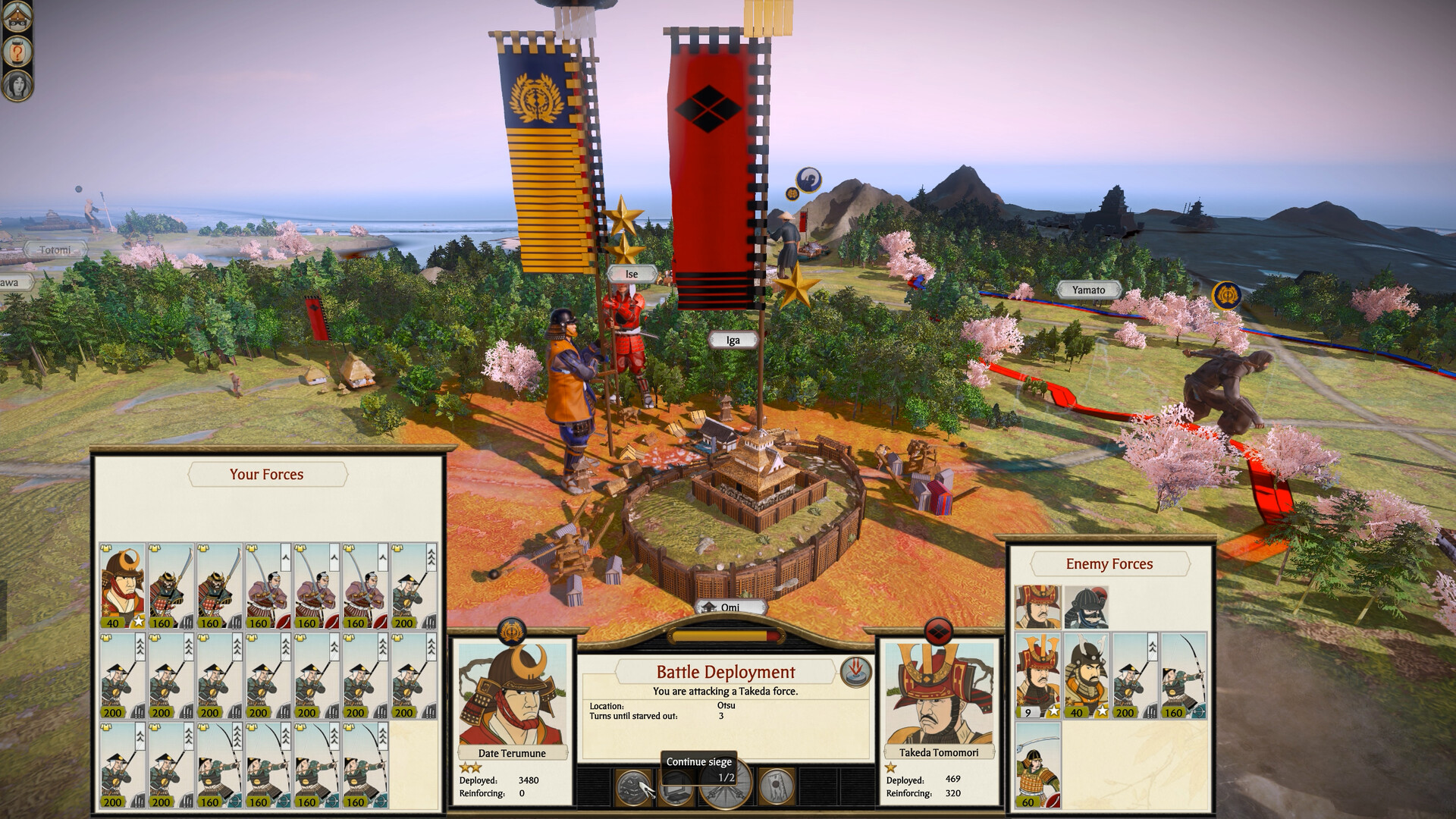
At the battle panel, inspect both the garrison and enemy reinforcements. If an assault would leave your army too damaged to continue, maintaining the siege can force the defenders to face starvation or sally out. Winning against a sally does not automatically give you the castle, so check who still owns the settlement afterwards.
Choose peaceful occupation when you need a province that can support the next advance. Looting gives immediate money but worsens public order and harms your daimyo’s honour. After capture, inspect the public order breakdown before marching the whole army away. Occupation unrest, religious differences, taxes and food shortages can combine in the same province.
Leave enough troops to repress unrest, reduce or suspend taxation where necessary, and repair the buildings you need for income or recruitment. Damaged buildings recover slowly for free if you leave them alone; paying for repairs brings them back sooner. Revisit the province’s order after changing the garrison, because removing soldiers also removes their repression.
Build the route to Kyoto through diplomacy and research
Choose your next war around your remaining territorial objectives. A province that opens the road to Kyoto or contains a required objective is more useful to the campaign than an isolated conquest that needs its own permanent army. Keep an eye on bridges and mountain passes: an army positioned at a narrow route can block enemy movement there.
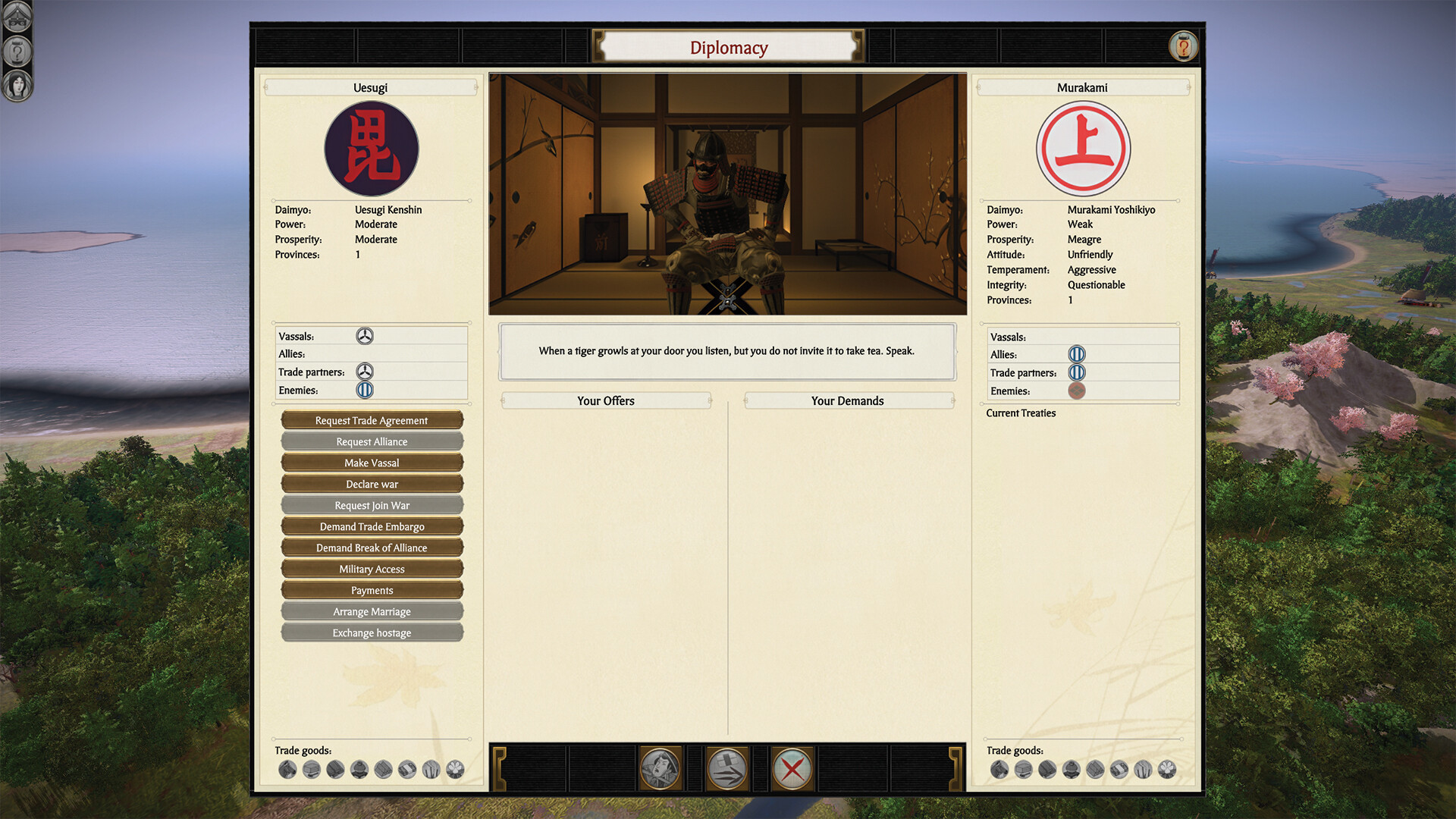
Look for trade with neighbours you are not about to attack. Complete Edition’s Quick Deal shows how willing clans are to negotiate each deal type. Select the trade deal, then a suitable clan to open negotiations. The finance panel’s trade tab shows exported resources, profits and the resources available to your clan. Some advanced buildings and troops need particular resources. For overseas trade in the main campaign, send a trade ship to a sea trade post; the flashing yellow coin on its flag shows trading has begun.
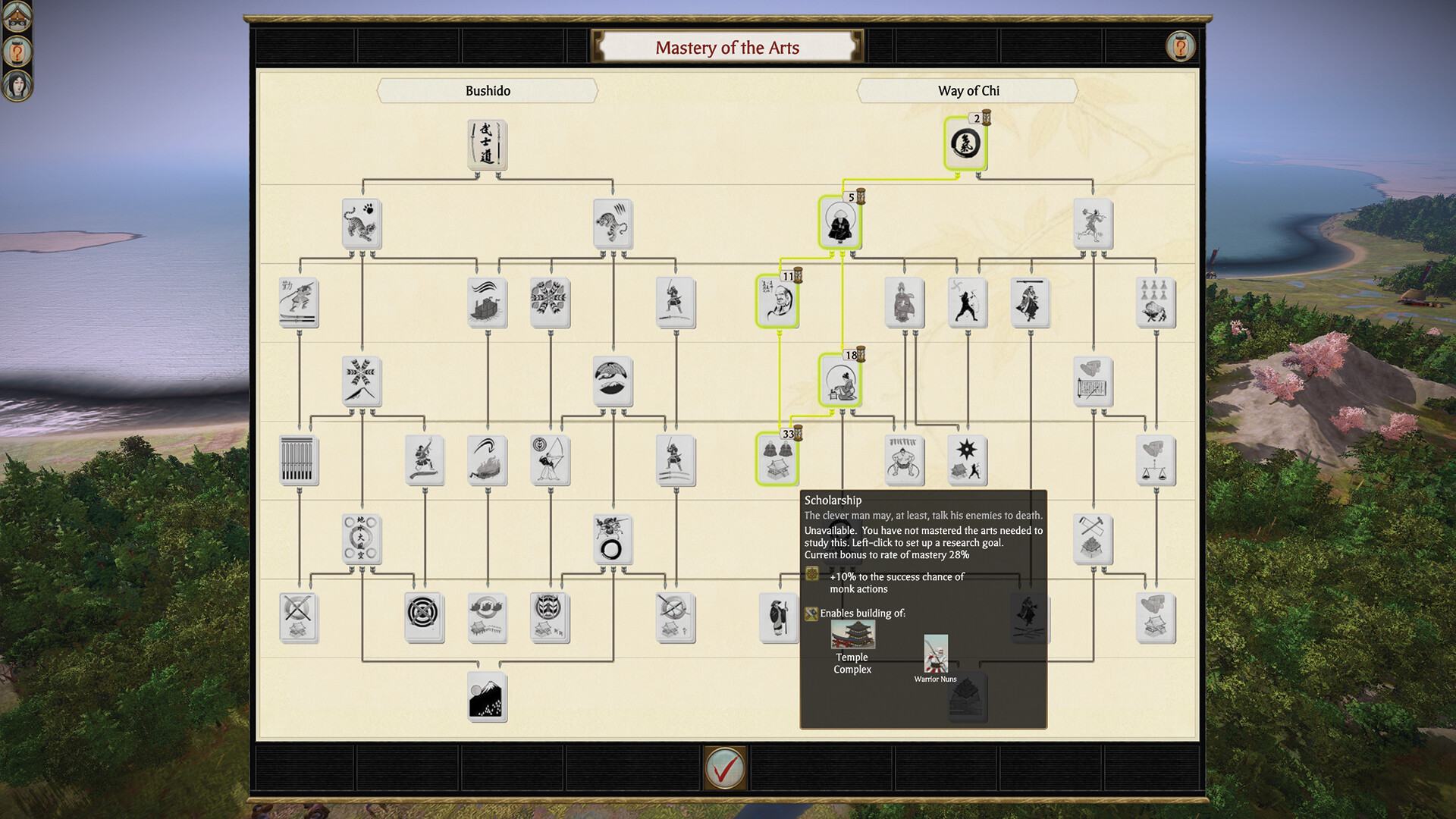
Open Mastery of the Arts when a desired building or unit is unavailable. Hover over an art to inspect its effects and time to completion, then choose the prerequisite that resolves your current need. You can master only one art at a time. Setting a research goal follows the prerequisite chain toward that target, and switching research preserves progress on the art you leave.
If your next farm upgrade or recruitment building needs an art, finish that requirement before reserving money for the building. Bushido and Way of Chi are separate parts of the tree, but your campaign may need to move between them as military and economic problems change.
Prepare for Realm Divide before taking another province
Open the Summary tab in clan management to check fame as you expand. Province ownership, victories and defeats, daimyo honour and legendary buildings contribute to it. With the original Realm Divide rules enabled, becoming powerful enough can make the Shogun declare you an enemy of the state before you attack Kyoto. Marching against the Shogunate can also bring the confrontation forward.
As fame rises, spend a few turns securing thinly defended borders before taking more territory. Replenish the attacking army, establish a force that can protect the rear, and save money for recruitment and upkeep. Your current allies can turn against you during Realm Divide, so place troops where those allies could reach your territory.
Review how much of the treasury depends on foreign trade. Budget for an army you can still maintain if those relationships collapse. Keep the productive provinces behind the front secure while the main army moves toward Kyoto; repeated rebellions there can take away both tax income and recruitment sites.
A ninja can scout enemy forces before you choose a battle. Army Sabotage can limit an enemy army’s movement and cause casualties, but its action panel gives a chance of success and the mission can fail. Keep a fallback defensive position instead of committing your entire advance to the sabotage succeeding.
Metsuke recruited through the market chain can oversee your own castle towns, increasing tax income and repression while helping detect enemy ninja. This makes them useful in a valuable province you need to keep productive. Agent actions cost money, so weigh an attempted bribe or assassination against the troops you could recruit with the same treasury.
Kyoto: the assault and the four-season defence
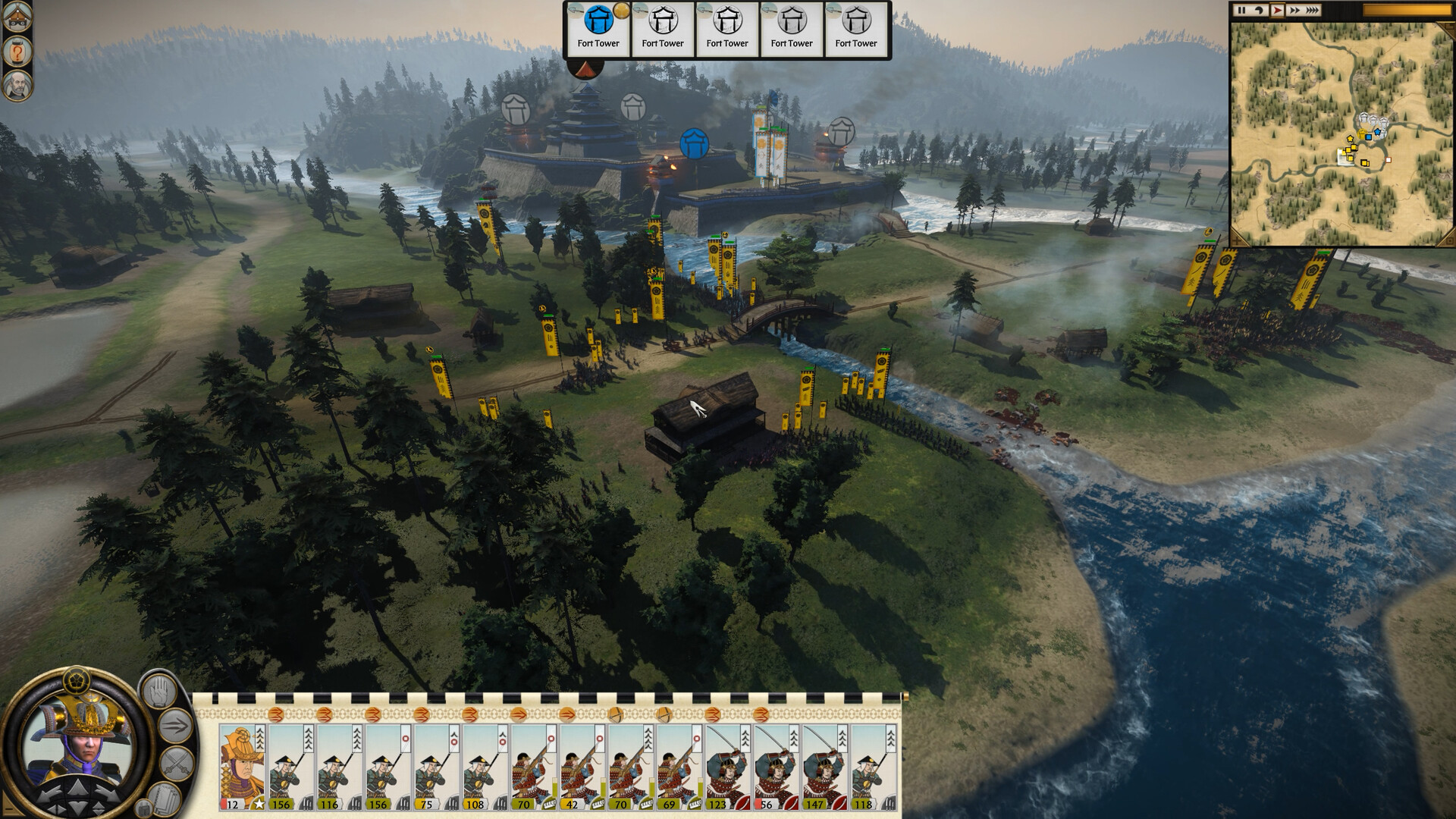
Once you can afford the war around Kyoto, bring the main army into Yamashiro. Scout nearby enemy armies and move supporting troops into reinforcement range. A yellow line between friendly armies indicates they can reinforce one another. Check the battle panel before attacking so that your plan includes the forces that will actually enter the fight.
If you assault, use infantry to climb the sloping walls when the gates are closed. Captured towers can fire on the defenders, and opening gates lets more troops, including cavalry, enter. A successful ninja gate sabotage before the assault gives you open gates from the start. Fight through the castle toward its central keep, then hold that area for the capture countdown or rout or destroy the defenders to win.
Once Kyoto is yours, leave an army capable of defending it. Bow troops can shoot attackers on the approach while melee units meet soldiers who get inside the castle. Repair damaged buildings and deal with occupation unrest before treating Yamashiro as a safe base.
Hold Kyoto for four seasons to become Shogun. Give that defence time in your campaign schedule: arriving at the capital on the last possible turn leaves no room to complete the holding period. Keep relief troops within reach while your other armies take the provinces still required for victory. If a counterattack takes Kyoto, replenish the army on friendly territory and retake it. Return to the victory objectives after recapturing the capital to check what remains unfinished.
Finish the territorial objectives after becoming Shogun
Open the clan’s victory objectives after the Kyoto holding period. Becoming Shogun and completing the campaign’s territorial requirements are separate parts of the same victory. Check the province total and every named objective, then direct the next army toward the requirement you still lack.
If you have enough provinces but a named objective belongs to another clan, more unrelated conquests will not finish that requirement. If you own the named provinces but remain below the required total, expand where you can defend the gains while preserving Kyoto. Keep garrisons in your existing objective provinces so that a rebellion or counterattack does not undo progress elsewhere.
Before ending a turn near the deadline, revisit any province with falling public order and any army suffering winter attrition. Lower taxes or restore a garrison where unrest threatens a required province, and bring depleted armies onto friendly ground to replenish. Hold your required provinces and Kyoto through the turn that completes all the victory conditions, before the campaign deadline.